
Program timings and content may be subject to change


The growing complexity of wildfires requires aerial platforms that combine high performance with mission-specific versatility. This presentation highlights Leonardo's fleet of aircraft & helicopters at the forefront of modern aerial firefighting & shows how integrated digital & space technologies enhance their effectiveness.


This presentation looks at the Italian aerial firefighting fleet not in isolation, but as part of the broader European wildfire management framework. The focus is not operational detail, but strategic alignment between ambition, capacity & governance.
Coulson will discuss the evolution of fighting fires at night showcasing the LA Basin Quick Reaction Force & discuss the technology based systems incorporated into the Coulson Large Airtanker Fleet

Italian National Law assigns primary responsibility for active forest firefighting to the Regions, which operate their own aerial resources. At the national level, the Department of Civil Protection (DCP) retains key coordination and support functions. Through the Central Functional Centre for Wildfire Risk, the DCP issues a daily national wildfire susceptibiity bulletin, identifying three risk levels - low, medium, and high - for each province.
Operational aerial coordination is ensured by the Combined Air Operations Center (COAU), the national structure responsible for managing the State's aerial firefighting fleet. Regional operations rooms submit requests for aerial support to the COAU, which evalutes priorities and deploys assets accordingly, guaranteeing effectiveness and unity of effort across the country.
The State fleet includes Canadair CL-415 aircraft and Erickson S-64F helicopters operated by the National Fire Corps, as well as additional aircraft temporarily made available by other State administrations, incuding the Armed Forces and the Carabinieri. Fleet positioning and deployment are dynamically adjusted based on meteorological forecasts, the national wildfire risk bulletin, historical data, aircraft availability and efficiency, logistical support at designed bases, regional asset disposition, and the presence of suitable water sources.
At the European level, under the Union Civil Protection Mechanism in force since 2014, the DCP acts as Italy's national focal point, requesting international assistance when required or providing national aerial assets to support other Member States.
Wildfires in Europe are escalating - not just in intensity, but in frequency, unpredictability, and geographic spread. In just a decade, the average area burned annually has more than doubled, and 2025 has become the worst year on record, with over 1.03 million hectares scorched by October.
Our upcoming report, "Up in Flames", explores this structural shift in depth. The traditional model of short, contained summer fires no longer holds: fire seasons are now longer, hotter, and increasingly simultaneous across regions, overwhelming response systems that were designed for isolated events. Southern hotspots like Spain and Portugal remain at the epicentre - accounting for up to two-thirds of the EU's total burned area in recent years - but risk is also spreading northward, and countries like Sweden and Finland reporting unprecedented fire activity.
This new fire regime is placing intense pressure on Europe's aerial response capacity. Despite the creation and expansion of rescEU, gaps remain in fleet size, personnel availability, maintenance capacity, and regulatory flexibility, particularly during peak demand periods. The report draws on expert insights from across Europe, North America and Australia to examine how the sector can adapt - from streamlining procurement and accelerating aircraft production, to improving cross-border interoperability, investing in specialised training, and rethinking the role of prevention.
This session presents the key findings from the research and expert panel, opening the floor to a share reflection: How can Europe scale up its aerial response fast enough to meet the challenge of a hotter, more fire-prone continent?

Italy has been at the forefront of supporting & adapting new fire technologies & practices. How does Italy assess new technologies & incorporate them into the fire mission? What are the structural challenges & how is 'the system' evolving to optimise outcomes? Specific to the aerial fire mission, what key learnings are being applied to assess & incorporate new technologies & capabilities?

De Havilland Aircraft of Canada has a long-standing reputation as a global leader in aerial firefighting aircraft operating both the Canadair and the Dash 8-400. The company today supports operators worldwide, with Europe representing a significant portion of both the Canadair fleet and customer base. European operator feedback and demand were instrumental in the decision to return the DCH-515 to production with European operators being the launch customer.
This presentation will highlight De Havilland's commitment to supporting operators and keeping the fleet flying through tailored solutions, strong OEM support, and enhanced fleet reliability enabled by modernization programs leveraging DHC-515 improvements. It will explore how De Havilland balances innovation with operational excellence to meet the evolving needs of aerial firefighting operations. Attendees will gain insight into De Havilland's strategic vision and the future of aerial firefighting, ensuring operational readiness today and for decades to come.

What is the role of RFMC and how is its work being applied to the growing wildfire challenge in the Balkan nations? What regional & national factors are influencing the application of wildfire knowhow to regional challenges? How is collaboration with OSCE, JICA, FAO and Western Balkan countries accelerating capabilities to improve outcomes? Specific to the aerial fire mission, what have been the key achievements & what is the path forward for regional capacities & capabilities?


Wildfire response planning often collides with real-word constraints - budgets, aircraft availability, completing priorities, seasonal maintenance, and non-standard fire seasons. This session explores how MAFFS supports critical surge demand, reduces long-term captial exposure, and provides a scalable path to strengthening national and regional wildfire response capabilities, with real-world operational insight across multiple platforms and operators.

Adoption of UAS into wildfire & fire operations is quickly becoming ubiquitous globally. Key regulatory bottlenecks are being addressed in many jurisdictions, but much work is still to be done. What roles are best suited to UAS capabilities & operations, and where should efforts be focused? What unmet needs are being addressed by UAS? Integrating UAS operations into legacy structure, including asset selection & training, are significant challenges. And where does the money come from in a restricted budgetary environment? This panel will share perspectives & case studies.




The dramatic increase in sensor capacities in space, via UAS & other aerial means, and ground-based sensors, is enabling game-changing improvements to the aerial fire mission. How best to integrate this data, how best to choose which services & which mix of service to optimise outcomes? What lessons are already being applied as the quantity & quality of data increases?



Drop efficiency remains a key area of focus for the AFF community. This panel will discuss how a new sensor-based approach can significantly enhance efficiency & outcomes.



Sponsored by Coulson Aviation
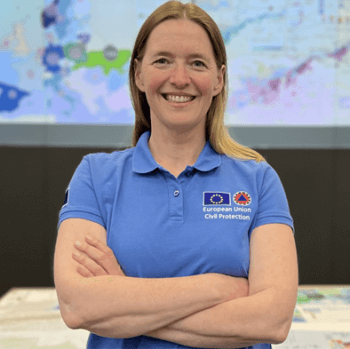
A brief presentation of the two companies & their role in Italian firefighting operations in collaboration with the Italian Department of "Vigili del Fuoco" using the iconic S64 helicopter, its specifications & capabilities.
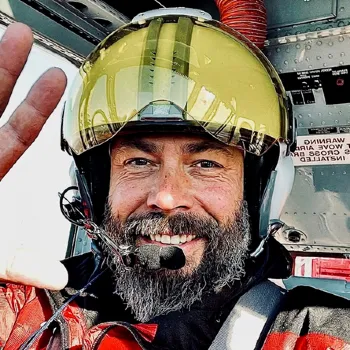



FAO promotes a global paradigm shift from fire suppression toward a holistic approach to Integrated Fire Management (IFM) structured around five elements: Review and Analysis, Risk Reduction, Readiness, Response and Recovery; together with UNEP, FAO launched the Global Fire Management Hub to strengthen countries' capacities to implement IFM through pillars on knowledge and data sharing, capacity building, wildfire-resilient communities, fire risk assessment and early warning, and IFM policy support and implementation.

The increasing occurrence and severity of extremely large and high-risk wildfires in some regions has led to a surge in requests from affected countries requiring support to strengthen their national capacity to prepare for and respond to extreme wildfire emergencies. With this increase in cross-border cooperation, there is a growing need for a framework that enhances international interoperability through enabling and timely, coordinated response, knowledge exchange, and policy support. Aligned with this, the need for initiating a coordinated international dialogue on interoperability in fire management is based on the following consideration:
- Effectiveness and efficiency of international cooperation in fire management rely on common understanding of fire management principles and policies, and require the development of long-term, cooperative relationships, including through voluntary bilateral and multilateral reciprocal agreements in cross-boundary cooperation in fire management.
- Existing internationally proven standards and rules for bilateral and multilateral engagement in emergencies, including safety considerations, should be considered for developing protocols and guidelines that will facilitate effective and efficient international cooperation in fire management.
Under the Global Fire Management Fire Hub, which is presented in the preceding contribution by the Food and Agriculture Organization (FAO), a Working Group on International Interoperability will support the advancement of international cooperation by enhancing international interoperability, including through evaluating proven and - where relevant - proposing standards and protocols for international interoperability while full respecting national and local procedures and operation frameworks. In its first phase of work, the WG will prioritize guidance for preparedness, readiness and response.
Facing escalating wildfire challenges, Airbus is collaborating with partners to develop an integrated ecosystem. This system is designed to enhance collaboration and interoperability among all involved stakeholders. By pioneering technologies for efficient detection and suppression, our goal is to provide an agnostic, global approach to wildfire fighting, incorporating advanced aerial firefighting capabilities and innovative connectivity solutions.


The A400M VLAT is available in large numbers and can play a significant role for indirect attack to help control ever-growing wildfires. Airbus wanted to obtain an independent assessment of the efficiency of the A400M Firefighting Kit solution to confirm it can work efficiently versus exciting ventral drops and pressurized systems. The test conducted by the Test and Research Centre (CEREN of Entente-Valabre have validated our initial vision, confirming that "the proposed A400M gravity solution meets the requirements for building a retardant barrier through indirect attack for use on intense fires, with trees, high or low vegetation, in open or close environment, and the way the retardant reaches the ground revealed a very positive behavior of the product with this gravity-dropping Kit". This confirmation is even more important from an economic perspective. The fact that we do not need to modify the aircraft, means the solution requires minimal investment in the Kit and has low mariginal operating costs for the Nations operating the aircraft.


CTIF has a critical role in supporting cross-border & cross-agency wildfire efforts. Their recent meeting in Bavaria highlighted great success in interregional collaboration & sharing of best practise. It also highlighted the growing WUI challenge, inconsistent training awareness, & challenges with cross-border aerial deployment. This session will discuss these challenges & offer recommendations that can improve outcomes for all stakeholders.
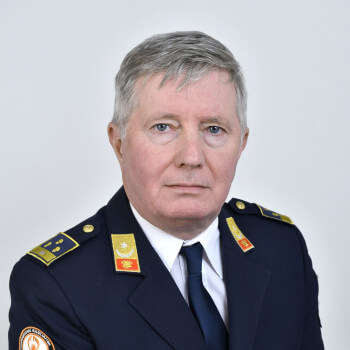


Numerous recent Congressional legislative actions, including the establishment of the US Wildland Fire Service, come at a critical moment for the US wildfire/aerial fire community. This panel will consider some of the key needs & opportunities, & challenges that may be addressed in this new era.
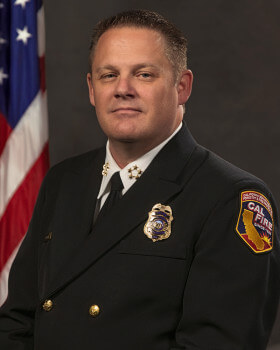

Recent years have seen a dramatic change in the Canadian wildfire picture, bringing significant new challenges for the aerial mission. Canada is rising to this challenges through a variety of improvements; policy, practises, investment in expanded capabilities/training and collaborate programmes. This panel will consider the 'journey at speed'; what's working, what's not, and identify key enablers being employed and considered that can deliver enhance outcomes.





Free time for follow up meetings, networking & pre-dinner break
Sponsored by Leonardo S.p.A.