Program timings and content may be subject to change
To access a PDF version of the programme please click - AFFAPAC26 Programme
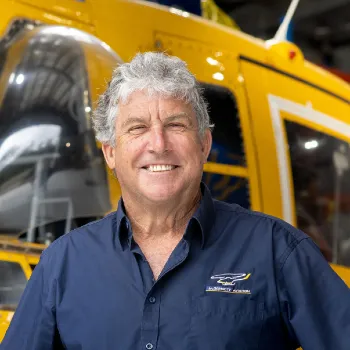
Uncle John Graham



This presentation highlights how EmberWorks, Coulson Aviation's Research & Development Division, is helping advance aerial firefighting capabilities in Australia and across the globe through innovation in aviation, operational intelligence, and emerging technology.
Topics include next-generation aerial fire retardant testing using a Coulson C-130 large airtanker, development of the ORBIT passive persistent aerial sensing system, and operational lessons from Coulson's 24-hour Quick Reaction Force during the 2025 Los Angeles wildfires. Through video demonstrations and real-world case studies, attendees will see how emerging technologies are improving situational awareness, response speed, operational effectiveness, and firefighter safety.
A core principle of EmberWork's research and development strategy is that innovation must be driven by the needs of end users. As these capabilities continue to mature for deployment across Coulson's global operations, collaboration with agency partners remains essential. The presentation will highlight work with Australian fire agencies to help evaluate and refine emerging technologies, ensuring future solutions are shaped by operational requirements and real-world experience. These partnerships are helping develop capabilities that can provide value not only across Australia, but throughout the global aerial firefighting community.

This talk presents the current findings from an ongoing research project funded by Natural Hazards Research Australia, with support from the National Aerial Firefighting Centre (NAFC) and state and territory fire agencies. The project, Why Fly? How do we know that aerial firefighting operations are effective and efficient", is investigating the use and effectiveness of firefighting aircraft across Australia. It aims to characterise current aircraft use and evaluate the effectiveness of aerial firefighting through several activities, including a comprehensive analysis of national drop data, case studies examining drop objectives and outcomes, and a practitioner survey on aircraft use and suitability.

AI is arriving in fire operations, but where it will genuinely help and where it won't be effective is still far from settled. Spread models, dispatch tools and alert systems are getting smarter each season, yet they're only as reliable as the data feeding them. In aerial firefighting, that data comes from sensors in demanding conditions, where quality varies and degrades in ways no interface makes visible.
This session looks at the considerations that come with that shift, how human judgement changes alongside automated systems and where accountability sits when an AI-assisted decision goes wrong. But the throughline is simpler: wherever AI ends up being used, the agencies that succeed with it will be those sitting on reliable, well-managed operational data.
Drawing on lessons from aviation, medicine and industrial automation, this is an informative session - not pro or anti-AI - for thinking clearly about a technology that's already here.



Transall Tankers and McDermott Aviation are redefining aerial firefighting capability at scale through the integration of fixed and rotary platforms.
The introduction of the C-160 Transall into the Large Air Tanker (LAT) program responds to increasing wildfire intensity and the need for high-volume, efficient suppression capability. The C-160 provides a proven, military-grade platform with strong payload capability, rear-ramp delivery integration, and the ability to operate from shorter, regional airfields supporting flexible, cost-effective deployment closer to firegrounds.
In parallel, McDermott Aviation is progressing new production of the 214ST, responding to a clear gap in the market for Transport category Heavy-medium lift helicopters capable of sustained operations, and precision delivery in complex terrains. The 214ST offers exceptional lift capability, robust engineering, and a proven design well suited to modern firefighting operations.
Re-establishing production presents challenges across certification, supply chain, and modernisation; however, proven aircraft have successfully been bought back into production where demand exists.
Together, the C-160 and 214ST represent a complementary, integrated approach delivering scale, flexibility, and operational effectiveness to meet the evolving needs for fire agencies.


Sponsored by TracPlus Global Limited
Sponsored by Coulson Aviation Australia
(invited guests only)

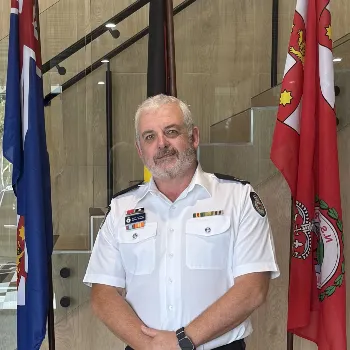


In an era where "Black Summer" conditions are no longer rare exceptions, suppression strategies must evolve with fire environment. Casino Logic: Changing the Odds in the Age of Megafire introduces a framework for wildfire suppression built around probability, thermodynamcis, chemistry, and tactical sequencing.
For decades, ammonium phosphate retardant has been a cornerstone of aerial suppression. It remains a proven and essential tool - but it performs best within its intended thermal stability envelope. Retardant supports containment by promoting char formation, altering fuel pyrolysis, and slowing combustion when its active phosphate chemistry remains intact. However, moder Australian crown fires can exceed 800ºC to 1200ºC, producing radiant heat flux and flame residence times that may overwhelm that chemistry before it can fully influence combustion.
This is where the Survivability Ratio matters: S - t_residence / t-decomposition
When flame residence time exceeds the time required for chemical decomposition, the odds shift against retardant performance. The chemistry may lose the race before it reaches the phase where it is most effective.
This presentation does not argue for replacing retardant; it argues for helping it work. Through the Sequential Suppression Model, it introduces a tactical shift from isolated product application to a coordinated Knockdown → Stabilize → Reinforce sequence. By using water-enhanced suppressants to cool active fire, reduce heat flux, and improve moisture residence, incident teams can create better conditions for retardant placement, holding, and follow-up suppression.
The goal is to manage probability, protect the chemistry, and stack the deck in favor of containment.


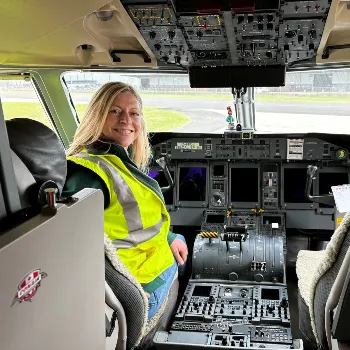

This presentation uses the Tongariro fire as a case study to explore the gap between visible aviation success and hidden system risk.
It looks at how aircraft activity, fire suppression, and the absence of an accident can create a perception that the system is working well, while underlying risks may still be building. Key themes include:
♦ The difference between aviation activity and aviation effect ♦ How pilot feedback can reveal a different operating picture ♦ Reported near-miss exposure, airspace complexity, and reliance on informal coordination ♦ Why information issued, such as NOTAMs and TRAs, is not always information received ♦ Human factors, blind spots, "coping ugly" and normalisation of drift ♦ The role of an Aviation Tactical Pause in resetting structure, comms, tasking and risk ♦ Shared responsibility across pilots, companies, incident management, operations, safety officers, aviation personnel and Air Desk ♦ How lessons identified only become lessons learned when they change culture, process, doctrine, training and systems